R-454B Refrigerant Cost Per Pound 2026 USA
By the Climate Home Editorial Team — reviewed for accuracy. Last updated October 2026. This article is for informational purposes and reflects typical market pricing; obtain local quotes for your specific project.
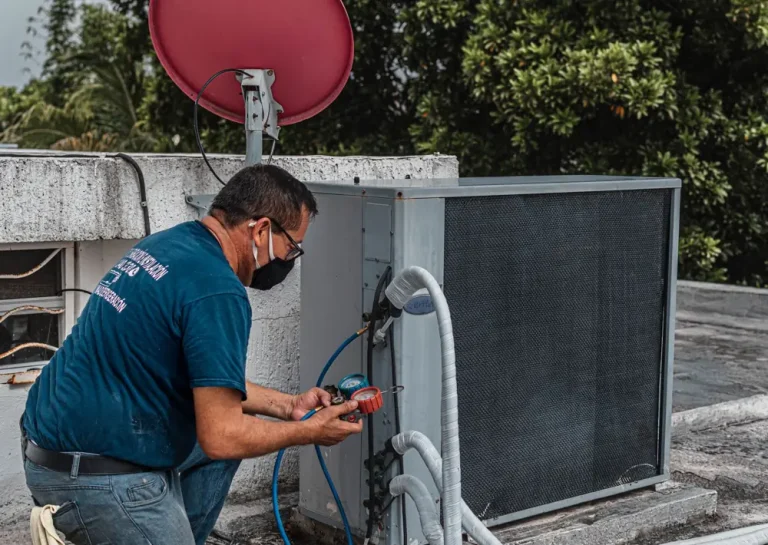
R-454B is the refrigerant the American AC industry is transitioning to — the A2L-class replacement for R-410A that new 2025+ systems require under EPA rules. The transition rewrote refrigerant economics: pricing per pound jumped, and repair-versus-replace math changed with it.
This guide prices R-454B refrigerant with 2026 US rates: the per-pound cost versus the R-410A it replaces, why the price premium exists (A2L engineering, early-market supply, safety handling), and what the transition means for owners of both new and legacy systems.
R-454B Refrigerant Cost Per Pound — At a Glance for US
R-454B runs $50–$120 per pound installed — versus R-410A at $50–100 per pound in its current legacy-market pricing. The premium buys the lower-GWP chemistry the EPA transition mandates: new systems from 2025 onward run A2L refrigerants, and the repair economics of leaks and top-ups now price accordingly. Homeowners with legacy R-410A systems are unaffected until replacement. This is a realistic planning number for the United States in 2026, not a marketing low-ball.
| Line Item | Typical Range (USD) | What Drives It |
|---|---|---|
| R-454B refrigerant (per pound, installed) | $50–$120 | The transition-class chemistry |
| R-410A comparison (legacy pricing) | $50–$100 | The old standard, legacy supply |
| R-32 comparison (global alternative) | $40–$80 | The other A2L path (not US residential standard) |
| Typical residential system charge (3–5 lbs) | $0–$0 | The total-charge multiplier |
| Leak repair labor (separate line) | $150–$600 | The fix that precedes any top-up |
| Recovery and recharge service | $120–$300 | The handling work either chemistry |
Understanding R-454B Refrigerant Cost Per Pound
R-454B is an A2L-class blend — mildly flammable chemistry engineered to replace R-410A’s high global-warming potential with roughly one-quarter the GWP. The 2025 EPA transition (the AIM Act’s final step-down) mandated A2L refrigerants in new residential systems, which makes R-454B the default charge in the new-equipment market from that date forward.
The pricing story is transition economics: new-chemistry production scale ramping against legacy-chemistry wind-down, A2L safety handling requirements (mild flammability changes tools and procedures), and the early-market supply dynamics that price any transition commodity. The per-pound premium is real — and for owners of new systems, it is the refrigerant reality their equipment was designed around.
What Moves the Price Up or Down
The per-pound spread:
| Factor | Cost Impact | Detail |
|---|---|---|
| Transition supply dynamics | ±20–40% | Early-market pricing behavior |
| A2L handling requirements | +service cost | Mild-flammability procedures and tools |
| Contractor A2L certification | market maturity | The trained-technician supply |
| Region and distributor tier | ±10–15% | Market-rate variance |
| Leak-then-top-up versus full recharge | labor difference | The service pattern decides the total |
| System charge size (3–5 lbs typical) | the multiplier | Per-pound × charge = ticket |
Refrigerant Economics Compared
The honest chemistry bracket:
| Option | Description | Best For | Cost Level |
|---|---|---|---|
| R-454B (the US new-system standard) | A2L transition class, 2025+ systems | New equipment from the transition date | Premium per pound ($50–120) |
| R-410A (the legacy standard) | Phase-down economics, existing systems | Pre-2025 equipment repairs | Legacy pricing ($50–100) |
| R-32 (the global alternative) | The A2L path most of the world took | Imported equipment, global context | Lower per pound ($40–80) |
US homeowners meet R-454B through new-system purchases and their repairs; legacy R-410A systems price their own repairs until replacement day. The transition’s honest meaning: new-system ownership includes new-refrigerant economics.
Three Realistic Project Scenarios
Budget — top-up on a new system after install — $60–$200
Post-install tweak, small loss found at commissioning.
- 1–2 lbs R-454B + service call — $60–$150
- Warranty-covered (often) — $0–$100
Why this matters: the commissioning catch: small losses found at startup price modestly, and warranty terms often cover them.
Mid — leak repair + top-up — $350–$700
Pinhole leak in a line-set, repair + 3 lb recharge.
- Leak diagnosis and repair — $150–$400
- 3 lbs R-454B installed — $150–$360
Why this matters: the classic repair pattern: find it, fix it, charge it — the per-pound premium prices into the total honestly.
Premium — full recharge after major repair — $500–$900
Component replacement that empties the circuit, full 5 lb recharge.
- Repair + recovery service — $200–$400
- 5 lbs R-454B installed — $250–$600
Why this matters: the full-charge scenario: major repairs that open the circuit price the complete charge — the per-pound multiplier at its heaviest
The scenarios price the service ladder: top-ups modest, leak-repairs mid, full recharges at the multiplier’s peak — per-pound economics × the charge size.
Sample Budget Breakdown
The table below shows how a typical mid-range budget for r-454b refrigerant cost per pound distributes across equipment, labor and compliance in the United States. Adjust the percentages to your own scope before using it as a savings target.
| Category | Estimated Amount | Explanation | Optimization Tip |
|---|---|---|---|
| Refrigerant itself (per-lb × charge) | $50–$600 | Chemistry × volume | Ask the per-pound price AND the charge estimate — the two numbers multiply into the ticket |
| Leak diagnosis and repair | $150–$600 | The fix that precedes any charge | Top-ups without leak repair are refill-and-forget economics — the leak wins eventually |
| Service and recovery work | $120–$400 | Licensed handling | A2L procedures add handling cost the transition mandates — the certified technician line |
Every figure above is an indicative 2026 market range. Final quotes move with site conditions, contractor availability and the exact specification you lock in.
From Quote to Completion: the Typical Timeline
Most r-454b refrigerant cost per pound projects follow the same five-stage rhythm. Knowing the calendar before you sign prevents the two classic frustrations — feeling rushed into a deposit, and being surprised by a mid-project gap while equipment arrives.
- Day 1–7: part sourcing — Common parts (capacitors, contactors, fan motors) are same-day; boards and coils run days; compressors run 1–2 weeks.
- Repair visit: 1–4 hours — Part swap, system test, and a refrigerant check if the circuit was opened.
- Same season: follow-up — A post-repair performance check catches secondary damage before it becomes the next callout.
- Annually: prevention — The pre-season tune-up that keeps the repaired system from becoming a repaired-again system.
- Hour 0–24: diagnosis — A paid diagnostic visit identifies the failed component and the repair-vs-replace math.
Smart Ways to Control the Budget
Cost control on r-454b refrigerant cost per pound is mostly about scope discipline and timing. These are the strategies that consistently deliver the largest savings:
Repair-vs-replace math at 10 years
A repair quote above 30% of replacement cost on a system past year 10 usually tips toward replacement — energy efficiency gains compound the case.
Advantages:
- Directly reduces the controllable parts of the quote
- No impact on system quality or compliance when scoped correctly
Disadvantages:
- Replacement is a bigger ticket and a full day of work rather than an afternoon.
- Requires planning lead-time you may not have on urgent repairs
Buy the service plan only if it includes priority response
Plans priced at the value of two tune-ups rarely pay; plans that jump the emergency queue in July do.
Advantages:
- Directly reduces the controllable parts of the quote
- No impact on system quality or compliance when scoped correctly
Disadvantages:
- You pay annually for a benefit you use only during failures.
- Requires planning lead-time you may not have on urgent repairs
Pre-season tune-ups, not failure calls
A spring capacitor and contactor check costs a fraction of a July-evening emergency callout for the same parts.
Advantages:
- Directly reduces the controllable parts of the quote
- No impact on system quality or compliance when scoped correctly
Disadvantages:
- Requires remembering to book in a season the AC is not on your mind.
- Requires planning lead-time you may not have on urgent repairs
Photograph the data plate before calling
Model and serial numbers turn phone quotes from guesses into real numbers and speed up part sourcing.
Advantages:
- Directly reduces the controllable parts of the quote
- No impact on system quality or compliance when scoped correctly
Disadvantages:
- You have to find the plate on the condenser, which is usually behind a shrub.
- Requires planning lead-time you may not have on urgent repairs
Permits, Rules and Safety
Transition-era compliance specifics:
- Compressor and coil replacements usually need a permit-with-inspection because the circuit opens and refrigerant is recovered.
- Warranty claims on replaced parts typically require the licensed invoice — keep the paper trail.
- Any work that opens the refrigerant circuit must be done by a licensed technician — DIY refrigerant handling is illegal in all five countries covered.
Maintenance and Long-Term Ownership Costs
The purchase price is only the first line of the budget. These recurring items are what r-454b refrigerant cost per pound owners in the United States actually spend money on:
| Task | Frequency | Typical Cost | Why It Matters |
|---|---|---|---|
| Condenser clearances | Seasonal | DIY (free) | Two feet of clearance around the outdoor unit keeps head pressures — and repair bills — down. |
| Refrigerant leak check | Yearly | $90–$160 | Systems losing charge run hot; a top-up is $150, a compressor cooked by low charge is $2,000+. |
| Drain pan and line | Yearly | DIY (free) | The secondary drain pan is the last line of defense before water damage claims. |
| Filter discipline | Every 1–3 months | DIY ($10–$30) | The repair that most often follows a neglected filter is a frozen coil — and frozen coils kill compressors. |
New-system maintenance is leak-prevention maintenance: annual checks that catch small losses before they price as recharges, and the coil care that prevents the corrosion-driven leaks that make refrigerant economics painful.
Frequently Asked Questions
Why is R-454B more expensive than R-410A?
Transition economics and chemistry: production scale still ramping, A2L handling requirements adding service cost, and early-market supply dynamics. The premium is the price of the environmental transition the EPA mandated.
Do I need to convert my existing system?
No — R-410A systems continue their service lives with legacy refrigerant supply. The transition applies to new equipment from 2025 onward; your existing system prices its own repairs until replacement day.
What happens if my new system leaks?
The repair pattern is unchanged: find the leak, fix it, recharge. What changed is the per-pound recharge cost and the A2L handling procedures — both of which make annual maintenance (catching small losses early) more valuable than it was.
Is R-32 coming to US homes too?
Most of the world standardized on R-32; the US residential market standardized on R-454B through the manufacturer choices of the transition window. Imported equipment and global context keep R-32 in the conversation, but US homeowners meet R-454B.
Summary
Planning r-454b refrigerant cost per pound in the United States starts with an honest range — $50–$120 for the scenarios most households actually install — then works backwards through the per-pound premium and the charge-size multiplier.
$50–120 per pound installed, × 3–5 lb typical charges — the transition’s refrigerant economics arrive with new-system ownership. Fix leaks before refilling, price both numbers (per-pound and charge), and let annual maintenance keep the multiplier small. Collect at least three itemised quotes, confirm the permit path before signing, and hold a 10–15% contingency for site surprises. Those three habits protect more budget than any product choice.