Refrigerant Recovery and Disposal Cost UK
By the Climate Home Editorial Team — reviewed for accuracy. Last updated October 2026. This article is for informational purposes and reflects typical market pricing; obtain local quotes for your specific project.
Refrigerant recovery is the legal-and-environmental gate on every UK system decommission: the F-Gas regulations require certified capture of refrigerant before any circuit opens, and the disposal chain prices the chemistry’s environmental accounting honestly.
This guide prices refrigerant recovery and disposal with 2026 UK rates: the recovery service itself, the disposal-chain economics (reclamation versus destruction), and the F-Gas compliance paperwork that makes the whole chain the licensed trade’s territory.
Refrigerant Recovery and Disposal Cost — At a Glance for UK
Refrigerant recovery and disposal in the UK runs £58–£290 — the certified recovery service at £80–200 as part of decommissioning work, disposal-chain fees at £40–150 by chemistry and quantity, and the paperwork that documents compliance. Bundled with replacement projects, recovery prices inside the install; standalone decommissions carry the full service economics. This is a realistic planning number for the United Kingdom in 2026, not a marketing low-ball.
| Line Item | Typical Range (GBP) | What Drives It |
|---|---|---|
| Recovery service (as part of replacement) | £58–£110 | Bundled decommission work |
| Standalone recovery visit (system removal) | £86–£180 | The full call-out economics |
| Disposal/reclamation chain fees | £29–£110 | By chemistry and quantity |
| F-Gas paperwork and certification | £14–£43 | The compliance documentation |
| Cylinder and transport handling | £14–£58 | The logistics layer |
| Contaminated refrigerant (premium disposal) | £58–£140 | The failed-chemistry scenario |
Understanding Refrigerant Recovery and Disposal Cost
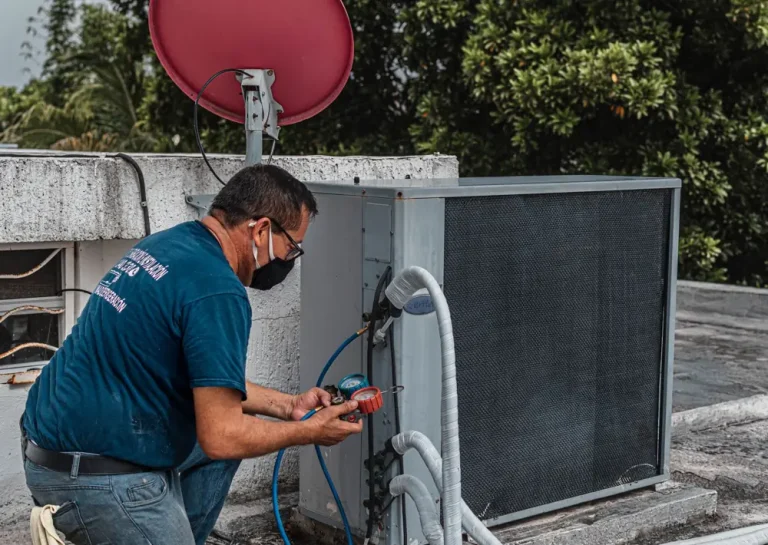
Recovery is the vacuum-and-capture process: certified equipment pulls refrigerant from the system into recovery cylinders, the chemistry is documented (type, quantity, condition), and the disposal chain takes it — reclamation (cleaning and reuse) where viable, destruction (incineration-grade) where not. The F-Gas framework makes every step licensed territory.
The UK pricing context: recovery bundled with replacements prices modestly (the technician is on-site anyway — £80–150 inside the install ticket); standalone decommissions carry full call-out economics. The disposal chain fees vary by chemistry and condition: clean recoverable refrigerant prices as reclamation feedstock; contaminated chemistry prices as destruction burden.
What Moves the Price Up or Down
The recovery spread:
| Factor | Cost Impact | Detail |
|---|---|---|
| Bundled vs standalone (context economics) | ±80–150 | Replacement-day vs dedicated visit |
| Refrigerant type (R-32/R-410A/legacy) | disposal-chain variance | Chemistry and quantity pricing |
| Quantity recovered (system size) | +20–100 | The volume multiplier |
| Contamination (burnout chemistry) | +40–100 | Destruction-grade handling |
| Access and system condition | +20–80 | The work realities |
| Documentation requirements | +20–60 | The F-Gas trail |
Recovery Scenarios
The honest patterns:
| Option | Description | Best For | Cost Level |
|---|---|---|---|
| Replacement-bundled recovery | Decommission inside the install project | System replacements (the common case) | Low (£80–150) |
| Standalone decommission | Dedicated removal visit | Renovations, system retirements | Mid (£160–350) |
| Contaminated-chemistry disposal | Burnout or mixed chemistry | Failed-system cleanups | High (£240–400+) |
The common case prices modestly inside replacement work; standalone decommissions carry service economics; contaminated chemistry pays destruction-grade premiums. Every path documents through the F-Gas chain.
Three Realistic Project Scenarios
Budget — recovery bundled with replacement — £65–£110
Old system recovered on replacement day.
- Recovery inside the install — £58–£86
- Disposal chain + paperwork — £7–£29
Why this matters: the common pattern: the technician on-site anyway prices the recovery honestly inside the replacement ticket.
Mid — standalone decommission visit — £140–£220
System retired without replacement, dedicated visit.
- Standalone recovery service — £86–£140
- Disposal + documentation — £58–£86
Why this matters: the renovation pattern: retirement without replacement carries full call-out economics plus the chain.
Premium — contaminated chemistry cleanup — £200–£290
Compressor burnout contaminated the charge.
- Contaminated recovery handling — £110–£160
- Destruction-grade disposal + paperwork — £94–£140
Why this matters: the burnout scenario: failed-system chemistry prices destruction-grade — the environmental accounting at its honest premium
The scenarios price context: bundled recovery rides replacement economics, standalone visits carry service costs, and contaminated chemistry pays the disposal chain’s premium tier.
Sample Budget Breakdown
The table below shows how a typical mid-range budget for refrigerant recovery and disposal cost distributes across equipment, labor and compliance in the United Kingdom. Adjust the percentages to your own scope before using it as a savings target.
| Category | Estimated Amount | Explanation | Optimization Tip |
|---|---|---|---|
| Recovery service | £58–£160 | By context and handling | Bundled with replacement whenever possible — the on-site economics are honest and the paperwork flows with the install |
| Disposal chain fees | £29–£140 | Chemistry-dependent | Clean recoverable chemistry prices as feedstock; contamination prices as burden — the chain accounts honestly |
| Compliance documentation | £14–£43 | The F-Gas trail | The certificates that document the legal chain — worth every pound when the audit trail matters |
Every figure above is an indicative 2026 market range. Final quotes move with site conditions, contractor availability and the exact specification you lock in.
From Quote to Completion: the Typical Timeline
Most refrigerant recovery and disposal cost projects follow the same five-stage rhythm. Knowing the calendar before you sign prevents the two classic frustrations — feeling rushed into a deposit, and being surprised by a mid-project gap while equipment arrives.
- Repair visit: 1–4 hours — Part swap, system test, and a refrigerant check if the circuit was opened.
- Same season: follow-up — A post-repair performance check catches secondary damage before it becomes the next callout.
- Annually: prevention — The pre-season tune-up that keeps the repaired system from becoming a repaired-again system.
- Hour 0–24: diagnosis — A paid diagnostic visit identifies the failed component and the repair-vs-replace math.
- Day 1–7: part sourcing — Common parts (capacitors, contactors, fan motors) are same-day; boards and coils run days; compressors run 1–2 weeks.

Smart Ways to Control the Budget
Cost control on refrigerant recovery and disposal cost is mostly about scope discipline and timing. These are the strategies that consistently deliver the largest savings:
Get a diagnosis fee, not a free estimate
Paid diagnostics arrive with findings and options; free estimates arrive with a sales pitch for whatever the company sells.
Advantages:
- Directly reduces the controllable parts of the quote
- No impact on system quality or compliance when scoped correctly
Disadvantages:
- The $80–150 fee stings when the problem turns out to be a $20 part.
- Requires planning lead-time you may not have on urgent repairs
Repair-vs-replace math at 10 years
A repair quote above 30% of replacement cost on a system past year 10 usually tips toward replacement — energy efficiency gains compound the case.
Advantages:
- Directly reduces the controllable parts of the quote
- No impact on system quality or compliance when scoped correctly
Disadvantages:
- Replacement is a bigger ticket and a full day of work rather than an afternoon.
- Requires planning lead-time you may not have on urgent repairs
Buy the service plan only if it includes priority response
Plans priced at the value of two tune-ups rarely pay; plans that jump the emergency queue in July do.
Advantages:
- Directly reduces the controllable parts of the quote
- No impact on system quality or compliance when scoped correctly
Disadvantages:
- You pay annually for a benefit you use only during failures.
- Requires planning lead-time you may not have on urgent repairs
Pre-season tune-ups, not failure calls
A spring capacitor and contactor check costs a fraction of a July-evening emergency callout for the same parts.
Advantages:
- Directly reduces the controllable parts of the quote
- No impact on system quality or compliance when scoped correctly
Disadvantages:
- Requires remembering to book in a season the AC is not on your mind.
- Requires planning lead-time you may not have on urgent repairs
Permits, Rules and Safety
F-Gas compliance frames everything:
- Any work that opens the refrigerant circuit must be done by a licensed technician — DIY refrigerant handling is illegal in all five countries covered.
- Compressor and coil replacements usually need a permit-with-inspection because the circuit opens and refrigerant is recovered.
- Warranty claims on replaced parts typically require the licensed invoice — keep the paper trail.
Maintenance and Long-Term Ownership Costs
The purchase price is only the first line of the budget. These recurring items are what refrigerant recovery and disposal cost owners in the United Kingdom actually spend money on:
| Task | Frequency | Typical Cost | Why It Matters |
|---|---|---|---|
| Refrigerant leak check | Yearly | $90–$160 | Systems losing charge run hot; a top-up is $150, a compressor cooked by low charge is $2,000+. |
| Drain pan and line | Yearly | DIY (free) | The secondary drain pan is the last line of defense before water damage claims. |
| Filter discipline | Every 1–3 months | DIY ($10–$30) | The repair that most often follows a neglected filter is a frozen coil — and frozen coils kill compressors. |
| Capacitor and contactor check | Yearly pre-season | Included in tune-up | The two parts that fail most are also the cheapest to replace before failure. |
Recovery is end-of-life maintenance: the F-Gas logbook that documents your system’s chemistry history makes decommissioning straightforward. The annual service records — refrigerant type, quantity, top-ups — are the paperwork that the final recovery completes.
Frequently Asked Questions
Why can’t refrigerant just be vented?
Legally and environmentally: F-Gas regulations prohibit release (these chemistries are potent greenhouse gases), and the licensed recovery chain exists to capture, document, and route the chemistry properly. Vented refrigerant is an offence with real penalties.
Is recovery included in replacement quotes?
Honest quotes show it: the £80–150 line inside the replacement ticket — the decommission work the installer performs on replacement day. Quotes that omit it either bundle silently or surprise later; the itemized version is the honest one.
What happens to recovered refrigerant?
The disposal chain routes it: clean chemistry to reclamation (cleaned and reused — the circular route), contaminated chemistry to certified destruction. The documentation follows the chemistry through the chain — the F-Gas trail that keeps the accounting honest.
Does the type of refrigerant change the cost?
Modestly: the chain prices by chemistry and condition — common recoverable types price as feedstock, contaminated or mixed chemistry prices as destruction burden. The quantity (system size) moves the total more than the type in most household cases.
Summary
Planning refrigerant recovery and disposal cost in the United Kingdom starts with an honest range — £58–£290 for the scenarios most households actually install — then works backwards through context economics and the chemistry’s condition.
£80–150 bundled inside replacements, £160–350 standalone, £240–400 for contaminated chemistry — the recovery chain prices the legal environmental accounting honestly, and the F-Gas paperwork documents every step. Bundle with replacement whenever the calendar allows. Collect at least three itemised quotes, confirm the permit path before signing, and hold a 10–15% contingency for site surprises. Those three habits protect more budget than any product choice.