R-32 Refrigerant Recharge Cost Per Kg Australia
By the Climate Home Editorial Team — reviewed for accuracy. Last updated October 2026. This article is for informational purposes and reflects typical market pricing; obtain local quotes for your specific project.
R-32 is the refrigerant Australia chose early — the mildly-flammable A2L class that most of the world standardized on while America went its own R-454B route. Australian split systems have run R-32 for years, and the recharge economics are mature-market pricing.
This guide prices R-32 recharges per kilogram with 2026 Australian rates: the per-kg cost of the chemistry itself, the service patterns that decide the total ticket (top-up, leak-repair-plus-recharge, full system recharge), and the ARCtick licensing that legally frames who does the work.
R-32 Refrigerant Recharge Cost Per Kg — At a Glance for AU
R-32 refrigerant recharges in Australia run A$50–A$110 per kilogram installed — with the total ticket following the service pattern: small top-ups at $120–250, leak-repair-plus-recharge at $250–500, full system recharges at $300–600 by system size. The per-kg chemistry is the entry number; the diagnosis and repair labor around it is the honest ticket. This is a realistic planning number for Australia in 2026, not a marketing low-ball.
| Line Item | Typical Range (AUD) | What Drives It |
|---|---|---|
| R-32 refrigerant (per kg, installed) | A$50–A$110 | The mature A2L chemistry |
| Small top-up (0.5–1 kg + service) | A$150–A$310 | The minor-loss pattern |
| Leak diagnosis (dye/electronic) | A$110–A$220 | The find-it-first work |
| Leak repair (flare/fitting/component) | A$150–A$500 | The fix before any recharge |
| Full system recharge (by kg capacity) | A$380–A$750 | The complete-charge pattern |
| ARCtick licensed service call | A$110–A$190 | The legal handling gate |
Understanding R-32 Refrigerant Recharge Cost Per Kg
R-32 runs the majority of Australian split systems — the Daikin-led transition that preceded the American one by years. The chemistry: single-component A2L with about one-third the GWP of the R-410A it replaced, mildly flammable handling requirements, and mature-market supply that prices recharges honestly.
The Australian service pattern is leak-honest: the licensed trade (ARCtick for refrigerant handling) prices diagnosis before chemistry — finding the leak matters more than charging the system, because a top-up without a fix is scheduled repeat business for the leak. The honest service call prices the diagnosis, the repair, and then the recharge chemistry in that order.
What Moves the Price Up or Down
The per-kg spread:
| Factor | Cost Impact | Detail |
|---|---|---|
| Service pattern (top-up vs repair vs full) | the ticket driver | Chemistry is the small line |
| System charge size (0.7–2.5 kg typical splits) | the multiplier | Per-kg × charge capacity |
| Leak location (flare vs coil vs component) | +120–400 repair | The fix complexity |
| Metro vs regional service rates | ±15–25% | Travel and market pricing |
| After-hours callouts | +50–100 | Urgency pricing |
| Dye trace vs electronic detection | +50–120 | The diagnosis investment |
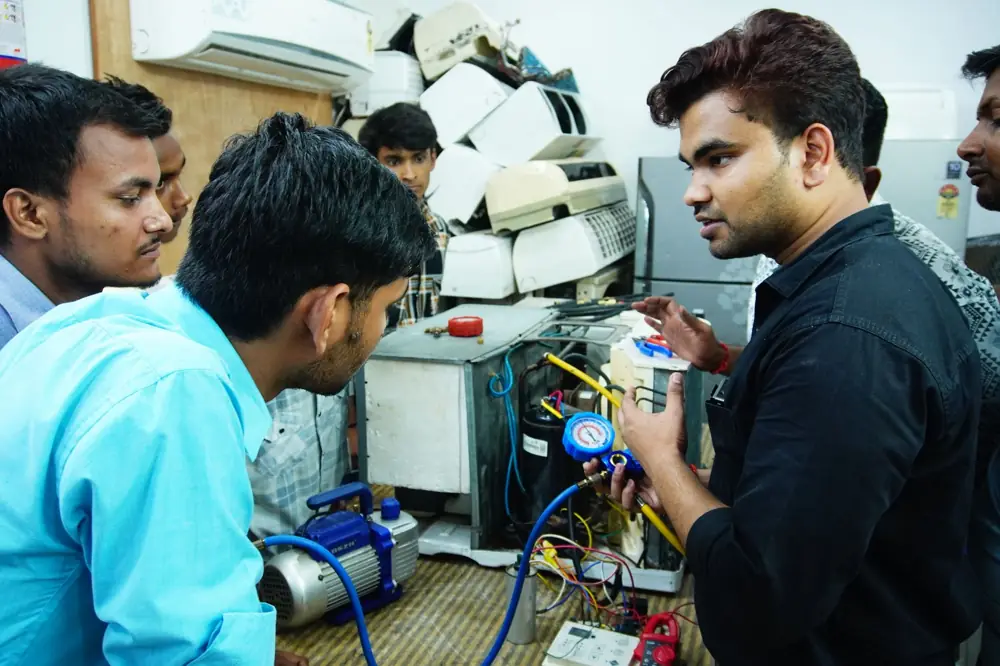
Recharge Service Patterns
The honest ladder:
| Option | Description | Best For | Cost Level |
|---|---|---|---|
| Top-up only (known small loss) | Recharge without repair | Post-service tweaks, monitored losses | Low ($120–250) |
| Diagnose + repair + recharge | The honest pattern | Leaks that need fixing | Mid ($250–500) |
| Full recovery and recharge | Circuit-opened major work | Component replacements, conversions | High ($300–600+) |
The pattern prices the ticket, not the chemistry: $40–90 per kg is the honest entry number, and the service work around it is where the real money lands. Top-ups without fixes are repeat business for the leak — price the diagnosis honestly.
Three Realistic Project Scenarios
Budget — monitored top-up — A$180–A$280
Annual service finds 0.5 kg low, no active leak signature.
- Top-up 0.5 kg + service call — A$180–A$280
Why this matters: the monitored pattern: small losses without leak signatures price modestly — with the honest note that next year’s service re-checks the level.
Mid — flare repair + recharge — A$400–A$600
Leak traced to a service-valve flare joint.’, )
- Diagnosis (electronic detection) — A$140–A$200
- Flare repair + 1 kg recharge — A$260–A$400
Why this matters: the classic pattern: the fix is a re-flared joint, the recharge is honest chemistry — the system runs right for years after.
Premium — full recharge after component work — A$560–A$750
Compressor replacement opens the circuit, full 2 kg charge.
- Component work (separate trade line) — A$0–A$0
- Recovery + full 2 kg R-32 recharge — A$380–A$520
Why this matters: the full-charge pattern: major work empties the circuit, and the complete recharge prices the per-kg multiplier at its heaviest
The scenarios are service patterns: monitored top-ups, honest repairs, and the full recharges that follow major work — per-kg chemistry rides each as the materials line.
Sample Budget Breakdown
The table below shows how a typical mid-range budget for r-32 refrigerant recharge cost per kg distributes across equipment, labor and compliance in Australia. Adjust the percentages to your own scope before using it as a savings target.
| Category | Estimated Amount | Explanation | Optimization Tip |
|---|---|---|---|
| Diagnosis (the first honest spend) | A$110–A$380 | Find before fix | Electronic detection or dye trace — the leak location prices the repair pattern downstream |
| Repair work | A$150–A$500 | By complexity | Flare joints price modest; coil and component leaks price as the replacements they are |
| Refrigerant chemistry (per-kg × charge) | A$50–A$220 | The materials line | $40–90/kg × 0.7–2.5 kg system charges — the smallest honest line on the ticket |
Every figure above is an indicative 2026 market range. Final quotes move with site conditions, contractor availability and the exact specification you lock in.
From Quote to Completion: the Typical Timeline
Most r-32 refrigerant recharge cost per kg projects follow the same five-stage rhythm. Knowing the calendar before you sign prevents the two classic frustrations — feeling rushed into a deposit, and being surprised by a mid-project gap while equipment arrives.
- Same season: follow-up — A post-repair performance check catches secondary damage before it becomes the next callout.
- Annually: prevention — The pre-season tune-up that keeps the repaired system from becoming a repaired-again system.
- Hour 0–24: diagnosis — A paid diagnostic visit identifies the failed component and the repair-vs-replace math.
- Day 1–7: part sourcing — Common parts (capacitors, contactors, fan motors) are same-day; boards and coils run days; compressors run 1–2 weeks.
- Repair visit: 1–4 hours — Part swap, system test, and a refrigerant check if the circuit was opened.
Smart Ways to Control the Budget
Cost control on r-32 refrigerant recharge cost per kg is mostly about scope discipline and timing. These are the strategies that consistently deliver the largest savings:
Pre-season tune-ups, not failure calls
A spring capacitor and contactor check costs a fraction of a July-evening emergency callout for the same parts.
Advantages:
- Directly reduces the controllable parts of the quote
- No impact on system quality or compliance when scoped correctly
Disadvantages:
- Requires remembering to book in a season the AC is not on your mind.
- Requires planning lead-time you may not have on urgent repairs
Photograph the data plate before calling
Model and serial numbers turn phone quotes from guesses into real numbers and speed up part sourcing.
Advantages:
- Directly reduces the controllable parts of the quote
- No impact on system quality or compliance when scoped correctly
Disadvantages:
- You have to find the plate on the condenser, which is usually behind a shrub.
- Requires planning lead-time you may not have on urgent repairs
Second opinion on compressor deaths
Compressor replacement diagnoses are wrong often enough — and cost enough — that a $100 second opinion pays for itself on the first avoided mistake.
Advantages:
- Directly reduces the controllable parts of the quote
- No impact on system quality or compliance when scoped correctly
Disadvantages:
- Delays the repair by a day in a house that is already warm.
- Requires planning lead-time you may not have on urgent repairs
Get a diagnosis fee, not a free estimate
Paid diagnostics arrive with findings and options; free estimates arrive with a sales pitch for whatever the company sells.
Advantages:
- Directly reduces the controllable parts of the quote
- No impact on system quality or compliance when scoped correctly
Disadvantages:
- The $80–150 fee stings when the problem turns out to be a $20 part.
- Requires planning lead-time you may not have on urgent repairs
Permits, Rules and Safety
ARCtick compliance frames the service:
- Any work that opens the refrigerant circuit must be done by a licensed technician — DIY refrigerant handling is illegal in all five countries covered.
- Compressor and coil replacements usually need a permit-with-inspection because the circuit opens and refrigerant is recovered.
- Warranty claims on replaced parts typically require the licensed invoice — keep the paper trail.
Maintenance and Long-Term Ownership Costs
The purchase price is only the first line of the budget. These recurring items are what r-32 refrigerant recharge cost per kg owners in Australia actually spend money on:
| Task | Frequency | Typical Cost | Why It Matters |
|---|---|---|---|
| Drain pan and line | Yearly | DIY (free) | The secondary drain pan is the last line of defense before water damage claims. |
| Filter discipline | Every 1–3 months | DIY ($10–$30) | The repair that most often follows a neglected filter is a frozen coil — and frozen coils kill compressors. |
| Capacitor and contactor check | Yearly pre-season | Included in tune-up | The two parts that fail most are also the cheapest to replace before failure. |
| Condenser clearances | Seasonal | DIY (free) | Two feet of clearance around the outdoor unit keeps head pressures — and repair bills — down. |
R-32 maintenance is leak-aware maintenance: annual service levels checked (a losing system is a leaking system), coil corrosion watched in coastal air, and the service history that makes small catches cheap instead of compounding.
Frequently Asked Questions
Why did my recharge cost more than the per-kg price?
Because the ticket is service work: diagnosis labor, repair labor, and the licensed call-out frame the chemistry line. The per-kg number is the materials entry point — the honest quote itemizes all three layers.
Can I top up my own system?
No — ARCtick licensing covers all refrigerant handling including R-32, and the A2L flammability class adds handling requirements beyond homeowner territory. The licensed call is the legal and safety frame.
How do I know if my system is low?
Performance tells: reduced cooling, longer run times, ice on the coil or line. The annual service catches it with gauges before the symptoms — which is the maintenance calendar’s honest value.
Is R-32 going to get expensive like other transitions?
The mature-market supply suggests stability — Australia standardized early, production scale is established, and the chemistry is the global volume choice. The transition-scarcity pricing that hits minority chemistries does not apply to the standard.
Summary
Planning r-32 refrigerant recharge cost per kg in Australia starts with an honest range — A$50–A$110 for the scenarios most households actually install — then works backwards through the service pattern and the diagnosis-first discipline.
$40–90 per kg is the chemistry, $120–600 is the honest service ladder it rides on — diagnose before fixing, fix before charging, and let the annual service keep the pattern at its cheapest tier. Collect at least three itemised quotes, confirm the permit path before signing, and hold a 10–15% contingency for site surprises. Those three habits protect more budget than any product choice.